

Do My Works Bring Me Closer to Christ?
Faith Matters resources to accompany your Come Follow Me study: May 18-24
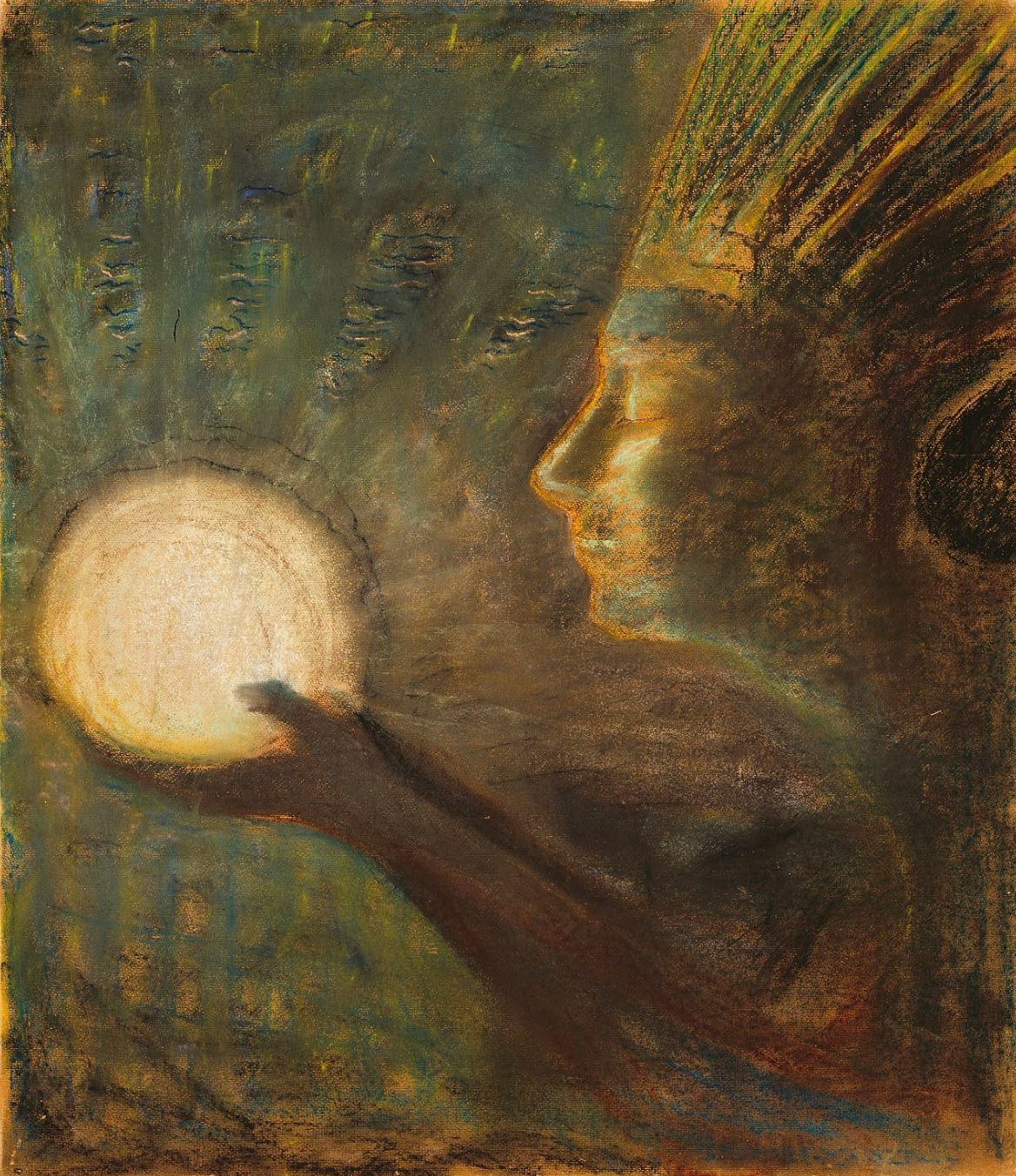
The word of God can make my way prosperous.


The authority of scripture lies in the faith and hope that such an experience can be repeated again and again as we read its pages, including those that we are tempted to pass over.
- Nate Oman, “The Joys & Dangers of a Textual Faith”
Both faith and works are necessary for salvation.


The partnership of this dance feels to me like salvation. Understanding this, I’ve stopped focusing on the Jesus who will come into my future and have started focusing on His coming into my present. The lines between a religious life and an everyday one blur. My search for a life in Christ requires a new kind of seeking and an entirely different orientation to my works. Works stop being a way to carry me into future grace and start being a way to orient me to present grace.
…
Works performed in response to grace are an expression of our intimate connection to God and all creation. We’re in partnership with God—in gracing.
- Hannah Packard Crowther, “Dancing with Christ”

In Matthew 7:21–23, the Lord describes a group of busy church people who say they’ve been prophesying and casting out devils and doing many wonderful works in His name. At first glance, this group appears to be doing all they can to build up Christ’s kingdom and draw others closer to Him. Yet, when they presented Him with their lengthy checklist of works, His reply wasn’t at all what we may be expecting. Rather than thanking them for their efforts or giving them credit for all their faithful service, His words were not only blunt but unbelievably shocking: He said, “I never knew you: depart from me, ye that work iniquity.”
As a church member with my own list of “wonderful works,” it almost hurts to hear Jesus say that. Why in the world would He reject those who are trying to do good? Why would He call their works—the very service they said was being done in His name—iniquity? The reason He provided is simple: “I never knew you.” Or as Joseph Smith translated it, “Ye never knew me” (Matthew 7:23, footnote a).
As I pondered His words, it hit me that this is a major tipping point when it comes to all our gospel service. Notice that Jesus’s measuring line isn’t those who do church works versus those who don’t, but those in a relationship with Him versus those who aren’t. It’s a dramatic flip that turns much of our church culture completely upside down. After all, if what we usually see as righteous works can be called iniquity if they’re done apart from Him, perhaps it’s time to view our busy religious checklist in a whole new light.
According to this passage, either I seek the Lord’s direction in all my service and respond to those situations as prompted, or I’m not His servant at all. Though I’d spent countless years pursuing what I believed was important church work, this scripture showed me that I can’t safely assume He approves of all my intentions. No, I need to know Him, to hear Him, to receive direct, daily guidance straight from Him. What a tragedy if I spend my life working “in His name,” only to end up like these people—sure I’m doing His will, but ultimately being cast out of His presence!
—Jaci Wightman, “The Observant Minister”
With faith in Jesus Christ, I can experience God’s “wonders.”


And yet, we have been counseled to seek and expect miracles. By definition, a miracle is improbable and inexplicable. Logic tells us a fallen bird in a ditch cannot fly again, but hope transcends logic. “Hope is a living gift, a gift that grows as we increase our faith in Jesus Christ,” Elder Neil L. Andersen taught. Reframing hope as a gift, a divine bestowal, rather than something we have to muster ourselves from depths of personal and global struggles, makes hope seem possible. Sometimes praying for the miracle I yearn for feels like too far a leap, but I have no reservations over asking for hope—a single dandelion of brightness in the expanse of heaven’s garden of gift.
In mortality, hope often comes as a reorientation rather than a remaking—the ability to refocus on light rather than shadow. Jesus’s disciples did not escape the oppression of Roman rule or find liberation from poverty. While some experienced miraculous healings, those who followed Him were asked to give up things they loved. Many of them were executed or endured illness and imprisonment. Yet Paul proclaimed that “hope maketh not ashamed.” Peter asserted that Jesus Christ gave us all a reason for “lively hope.” Nephi encouraged followers of Christ to have a “perfect brightness of hope.” King Lamoni’s wife stubbornly insisted that while her husband showed every indication of death, he still lived. These faithful disciples’ circumstances had not been remade yet, but their eyes were turned to the Light, certain that through Christ, every shadow would one day be swallowed up.
- Loren Lemmons, “Dirty-Feathered Hope”
In a faith culture that values “bearing testimony” and the confession of certainty, we often equate spiritual depth with unwavering confidence in our shared beliefs. The ego certainly prefers a spirituality focused on certitude and transactional agreements with God over a spirituality that asks us to love one another in our shared uncertainty and suffering. Why wouldn’t we want control in a fallen world? Obeying the rules in exchange for security is a desire that certainly makes sense. Our impulse to find order and predictability in the midst of disorder and pain is both understandable and deeply human.
But as we endure life’s inevitable losses, our spirituality tends to become one of recognition—a spirituality that perceives the beauty and wonder in life amid the necessary sorrows and hardships. And though our souls can feel a deep order within reality—divine truths we are all subject to—we understand that faith doesn’t grant us certainty or obviate suffering. Rather, it offers us solace, evidence of God’s love in sublime moments, and glimpses of the eternal that anchor us in a world full of loss.
—Jennifer Finlayson-Fife, “Our Bodies Are Holy Things”
Obedience invites God’s power into my life.

“We simply cannot afford to obscure God’s mercy or his quickness to forgive by suggesting that God might love the strictly obedient just a little bit more than the rest of us.” —George B. Handley, “Obedience as Gratitude”

“Choose you this day whom ye will serve.” I can choose to serve Jesus Christ.
One of the verses that for me really gets at the heart of our covenant theology is Jacob 6:5. After finishing a long sermon about God’s efforts to restore and uphold the house of Israel, Jacob invites his readers to recognize and act on divine love. He writes, “Wherefore, my beloved brethren, I beseech of you in words of soberness that ye would repent, and come with full purpose of heart, and cleave unto God as he cleaveth unto you.” That last line—“cleave unto God as he cleaveth unto you”—has always stood out to me. It reminds me of marriage (“Therefore shall a man . . . cleave unto his wife, and they shall be one flesh”), but it’s also an urgent invitation. When I was a kid, my friends and I would sometimes amuse ourselves by asking each other to help us get up off the ground but then going completely limp when one of us grabbed the other’s hand. It’s very hard to pick someone up when they’re not pulling against you. For me this is the substance of God’s invitation: His arm may be extended and his hand stretched out still, but we need to take it and hold on intentionally if we want to make it onto our feet.
—Peter Mugemanchro, “As He Cleaveth Unto You”
And could it be that at the heart of every covenant we make is this one same truth? It’s not just separate and distinct agreements made at baptism, during the sacrament, and in the temple. It’s not a legal contract with pages of clauses. It’s one promise. It’s one choice. It’s saying yes to gracing. Fundamentally, it’s not making covenants (plural), it’s living in covenant (singular). It’s living in Christ.
—Hannah Crowther, Gracing
“Be strong and of a good courage.”
The call to courage (root word cor, the Latin for heart) is not a call to charge into battle, replacing one amped-up emotion with another; it can be as simple as getting out of our amygdalas and into our hearts: vulnerably sharing our burden with a friend, sitting in the quietness of contemplation, or finding, as Peter Enns has said, a “deep trust” in God and moving forward in uncertainty.
—Tim Chaves, “The Sin of Fear”
Strength, then, does not come from clinging to an image of who we believe ourselves to be. It comes from acknowledging what we actually are—limits included—and allowing those limits to refine us. Real authenticity is not the freedom to remain unchanged, but the obligation to see who we truly are, and adjust accordingly.
—Rabbi Berel Feldman, “Tohu and Tikkun”
I must be baptized to enter the kingdom of heaven.
Baptism is not fundamentally about keeping some people out of heaven and letting others in. The symbol is an invitation. Baptism says, “Salvation is here.” Right now. Enter God’s presence and start living life as it was meant to be lived. Baptism says, “In Christ, your old self has died and your new one has risen.” Don’t wait. Enter into the divine dance now, so that when you mourn with those who mourn, and comfort those who stand in need of comfort, you will do these things differently. You will do them in Christ.
—Hannah Crowther, Gracing
