

Who is my family? What does The Family Proclamation mean today?
Faith Matters resources to accompany your Come Follow Me study: December 15-21
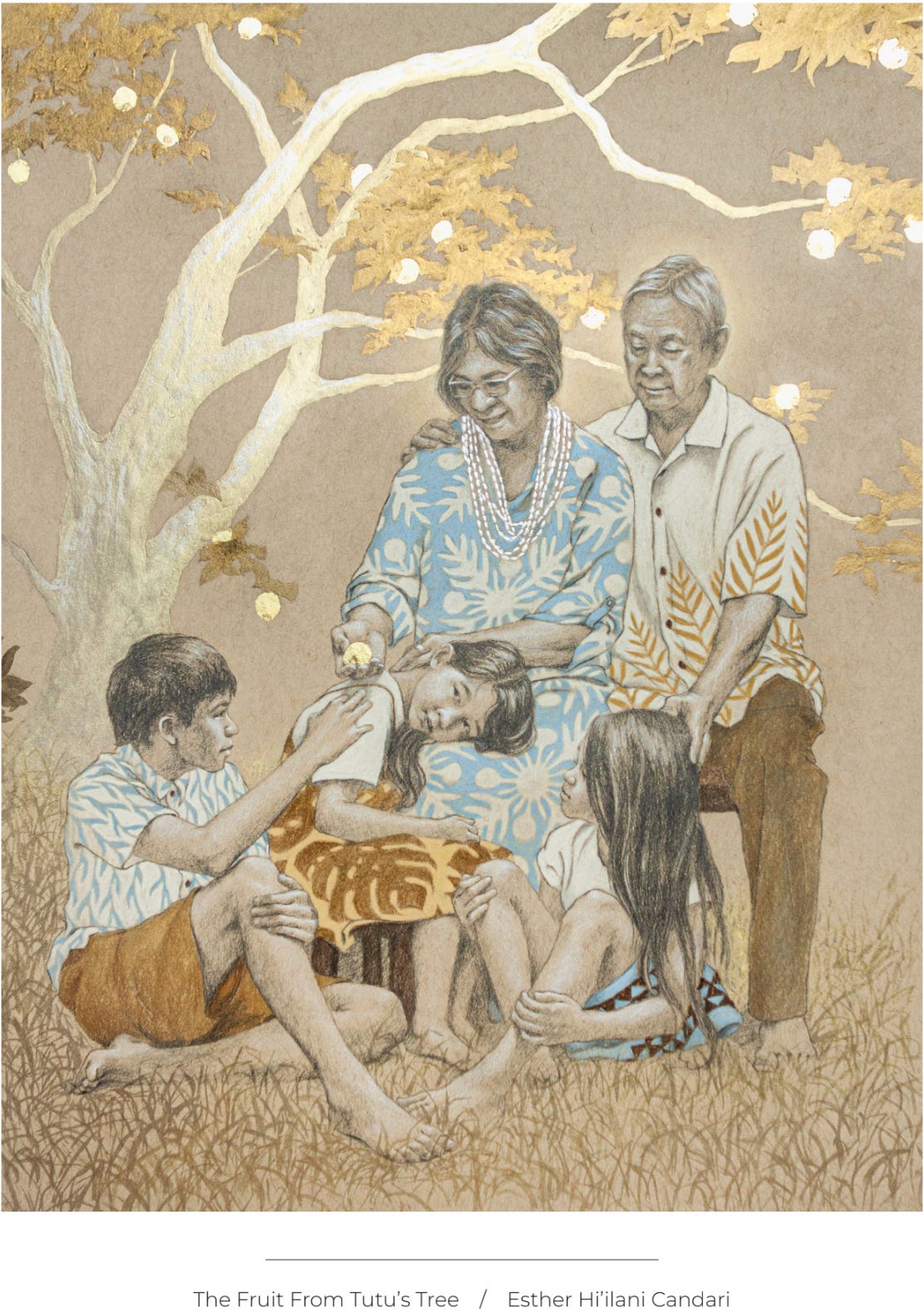
I begin by acknowledging that many church members have a really hard time with the Proclamation on the Family. I have seen evidence of this in at least two respects in my own life:
First: I have spent hundreds of hours during more than a decade working with and counseling young church members in the Bay Area. For many of them, the Proclamation lands as exclusionary, myopic, and hurtful. They see gay marriage, especially, as a great blessing for many of those they love, and wonder why God would inspire prophets to fight so ardently against it. These concerns are not abstract or theoretical; they feel the weight of the Proclamation’s words as having done real harm to themselves and those they love.
Second: It is difficult to know anymore what vital parts of the Proclamation mean in my own life. A number of years ago, my own young family underwent a series of wrenching changes. In ways I did not foresee and still do not entirely understand, the stable foundation we had built for our family crumbled, and I suddenly found myself a single father, parenting alone. Left to grapple with these new realities, the overall message of the proclamation felt confusing, distant, and unreal.
With all of this, perhaps you can understand why, when President Oaks—arguably the Proclamation’s foremost defender and explicator—rose to his feet for his first speech while leading the church… and began immediately referencing the Proclamation, my insides clenched and my brow furrowed.
I wasn’t sure I was ready to hear what he had to say.
Surprisingly, however, as I listened I eventually felt my muscles relax, and I experienced my mind softening into a dramatically different understanding of what the Proclamation is and what it is meant to do. I don’t know what Elder Oaks intended with the talk, but as I listened to him tell the story of his own youth, something shifted inside me.
—Tyler Johnson, “This Far But No Further”

“The family is central to the Creator’s plan.” Families are important in Heavenly Father’s plan.
We are blessed in our faith tradition to have an understanding of families that spreads so much farther and goes so much deeper than just the nuclear family unit. We believe in a family that can be sealed together for eternity, through countless generations, from child to parent to grandparent. It’s a family unit that is just as important and serves just as many purposes as the modern nuclear family. The branches of this eternal family tree spread wide enough to encompass siblings and cousins and aunts and uncles. Even when loved ones have passed from this life, we have the power to graft them onto our living tree through posthumous temple work. And, if you dig down far enough, you’d find that we all spring from the same roots. You. Me. Your neighbor. A stranger on the other side of the planet. Across distance and time, we share both the same heavenly parents and the same physical ancestors. We call each other “brother” and “sister” for good reason.
—Jeanine Bee, “Hymn of the Alloparent”

Where did our contemporary emphasis on the nuclear family come from? Learn from Nate Oman in “Our Evolving Sealing Practices”:


The restoration is still unfolding. We don’t understand fully the nature of familial organization in the world to come. But the most important thing—the thing that hasn’t changed from Joseph’s original vision to the present—is that there will be eternal bonds of affection that will be honored and preserved and magnified.

“Each [person] is a beloved son or daughter of heavenly parents.” I am a “beloved spirit son or daughter of heavenly parents.”
In this conversation, we explore how the simple truth that we are “beloved spirit children of Heavenly Parents” carries profound implications for how we understand the nature of God. It suggests that divinity isn’t solitary or hierarchical, but relational; we are not subjects of a distant king, but members of a divine family. And that shift transforms the way we see God, one another, and ourselves.

What do we know about Heavenly Mother?

The doctrine of a Heavenly Mother is a cherished and distinctive belief among Latter-day Saints. The Church’s essay on the topic can be found here. Based on that essay, we have published the following videos, podcast episodes, and articles you can peruse as you study this cherished doctrine:

“Happiness in family life is most likely to be achieved when founded upon the teachings of the Lord Jesus Christ.” Families are happiest when they follow Jesus Christ.

Drawing from his own experience with his own “messy” family, Joseph speaks openly about moments of despair, like the heartache of watching loved ones—including his own children—struggle with addiction, estrangement, and other crises.
But at the heart of his message is a radical idea: that the phrase “All is well” can be true even in the face of chaos and imperfection. He challenges the traditional “brochure” image of family success, reminding us that not even the families in our sacred texts had it all together. Through powerful stories of redemption, both from his own family and the lives transformed at The Other Side Academy, Joseph encourages us to rethink what it means to succeed as families, and to embrace waiting as part of God’s divine work.
We think Joseph’s words will resonate deeply with anyone who has felt the pain of seeing a loved one struggle, and we hope it offers both comfort and inspiration.


“We call upon responsible citizens … to maintain and strengthen the family.”
The Proclamation… boldly claims that men and women are intended, by divine design, to be “equal partners.”
As a result, it seems increasingly obvious to me that, in our day, defending the family means rooting out our world’s misogyny.
Defending the family means defending women from both the subtle and violent forms of degradation, abuse, and marginalization that riddle our world. It means taking seriously—perhaps for the first time in the history of the world—the solemn declaration that God intends men and women to be equal partners.
In my view, this will be the defining moral issue of our generation.
Studies have shown that alloparenting benefits children, nuclear families, and even the alloparents themselves, but perhaps the greatest benefit of alloparenting can be seen in human society. When a mother hands her child over to a teacher, grandparent, cousin, neighbor, sibling, or babysitter, she is manifesting a society built on trust. Evolutionarily speaking, she has to be reasonably confident that the person holding her baby will care for them, feed them, and protect them from danger. She has to believe that human society is dependable and that the world is well intentioned. By extending this kind of trust to the world around her, a mother creates a large family system for her child, which the child, in turn, learns to trust. … And alloparents must do their part to create a system built on trust, as well. When acting as an alloparent, we need to be trustworthy—develop relationships with the parents of the children we care for; participate in and abide by the rules outlined in youth protection trainings; support those who come forward as victims of abuse. These kinds of measures can not only protect children and families from harm, but can also protect the sacred trust required to sustain an alloparenting society.
However, this trust can also be fragile, and today’s Western culture seems to be pushing society in the opposite direction, engendering distrust in the world by separating us from each other. In Hrdy’s words, “The modern emphasis on individualism and personal independence along with consumption-oriented economies, compartmentalized living arrangements in high rise apartments or suburban homes, and neolocal residence patterns combine to undermine social connectedness.” As this feeling of disconnect increases, as we turn inwards to focus on our nuclear families while excluding a potential social network of alloparents, we teach our children that the world cannot be trusted. And, perhaps more significantly, “a subset of children today [will] grow up and survive to adulthood without ever forging trusting relationships with caring adults, and their childhood experiences are likely to be predictive of how they in turn will take care of others.” Children who do not know how to trust the world will grow and raise their own children in that same distrustful environment. Indeed, as the Family Proclamation declares, the eternal family is “the fundamental unit of society.” And as generations of humans forget how to trust and care for their eternal spirit brothers and sisters, society will crumble as “compassion and the quest for emotional connection . . . fade away.”
—Jeanine Bee, “Hymn of the Alloparent”
While I am grateful that gender roles have softened to permit both men and women fuller opportunities to develop Christlike attributes and cultivate financial security, I am nostalgic for the robust economic conditions in which it was more plausible for a parent to dedicate their time exclusively to their children, their home, and their community. Now that these conditions no longer exist, I feel keenly the void in our communities and the strain upon parents. I appreciate the Church’s implicit stance that serving in the home should be enough without having to shoulder additional economic burdens.
—Natalie Brown, “The Once and Future Family”
Keep exploring this topic:

