

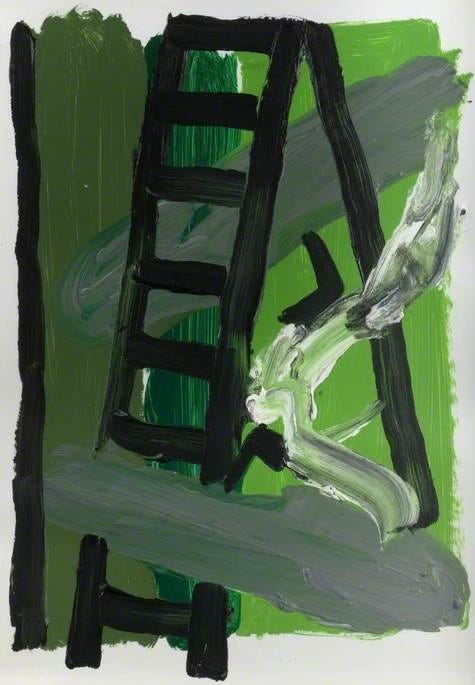
Covenant marriage is essential to God’s eternal plan.


I can value eternal things over temporal things. Eternal things are more important than worldly things.
From a transformative perspective, worldliness is any attempt to find security through finite means—safety, pleasure, the esteem of others, and the insatiable need to control our circumstances. The gospel invites us to leave this worldliness behind and find security in the only Reality that is worthy of our hearts. We are not sanctified by perfecting the false self but by waking up to an entirely new dimension of self, whose center of gravity is Christ.
—Thomas McConkie, At-One-Ment (read an excerpt here)
The Kingdom of Heaven, Jesus said, is within us. It’s not just in a far-away celestial land where God will make everything right that is currently wrong. As co-creators with God and co-builders of Zion, we can harness grace to intervene in the stickiness now—to merge the disparate visions of a glorious family-centered heaven with each heaven-centered human of earth’s family who wants to be there.
—Hannah Packard Crowther, Gracing
The challenge for the believer is that the prospect of eternity can detract from full attention to the moment. The prospect of life as something to get through, to endure, to devalue, has long been a pronounced strand in Christian history. It was not always that way. Before asceticism and other-worldliness took hold, Christians were alert to the “nowness” of heaven. “Let us love the present joy in the life that now is.”
—Terryl Givens, “Our Ongoing Resurrection”
“Our relationship to the physical world itself has been shaped in surprising ways by Greco-Roman culture and philosophy. For example, the early Christian movement incorporated the idea of Platonic forms, which says there is a perfect world “out there” in contrast to the deficient (and “fallen”) world we live in.
… Revealed scripture clearly states that the transformative process for Christ (and we can suppose it is the same for ourselves) isn’t just a movement of “up and out.” It’s not a matter of passing the test in a body then flitting off to the “real world” of spirit. Exactly as much as there is an “up and out,” a transcendence in the spiritual journey, there is a moving “down and through,” an immanence, into the heart of the earth and the very heart of matter.”
—Thomas McConkie, At-One-Ment

The covenants of the Lord’s house bring God’s power into my life. Covenants help me return to Heavenly Father.

The Lord remembers me in my trials.

The Savior can heal my family. Heavenly Father and Jesus Christ can help me love my family.



I can be kind to others.
Learning how big and beautiful and shared the world is, I try to share myself and my family more—to open myself to receive the grace God has to offer me. During sacrament meeting, I no longer try to contain my children to our pew (except during the sacrament itself). I let my baby wander the aisles. She shares her Cheerios and steals applesauce pouches and sits on the lap of a childless man in our ward. I tell my son, we are Heavenly Father’s and Heavenly Mother’s children, so we are all family. We can trust our family to help take care of our baby. We can trust our family to take care of us.
—Lindsey Meservey, “‘All Things Common’ Among the Courtyard”
We are blessed in our faith tradition to have an understanding of families that spreads so much farther and goes so much deeper than just the nuclear family unit. We believe in a family that can be sealed together for eternity, through countless generations, from child to parent to grandparent. It’s a family unit that is just as important and serves just as many purposes as the modern nuclear family. The branches of this eternal family tree spread wide enough to encompass siblings and cousins and aunts and uncles. Even when loved ones have passed from this life, we have the power to graft them onto our living tree through posthumous temple work. And, if you dig down far enough, you’d find that we all spring from the same roots. You. Me. Your neighbor. A stranger on the other side of the planet. Across distance and time, we share both the same heavenly parents and the same physical ancestors. We call each other “brother” and “sister” for good reason.
—Jeanine Bee, “Hymn of the Alloparent”