

Jesus Christ can turn tragedy into triumph.
We had lost our Rose. In that emptiness, I had also lost the God who would keep children safe, a God who could protect, a God I had been certain about. I had always prayed to a God who knew the future and could rescue, and more importantly, a God who wanted to. …
I had believed that if I obeyed, if I was good, if I worked hard, if I had enough faith, if I stayed in safe places, and if the people I loved stayed in safe places, then bad things would not happen to me or those I love. Mistakenly, I must have believed that I could control God’s blessings and ensure God’s protection with my behavior. When this idea shattered, I was left with a God who felt undeserving of my trust and love—a God who left. False ideas about God clung, like a heavy throat unwilling to clear. …
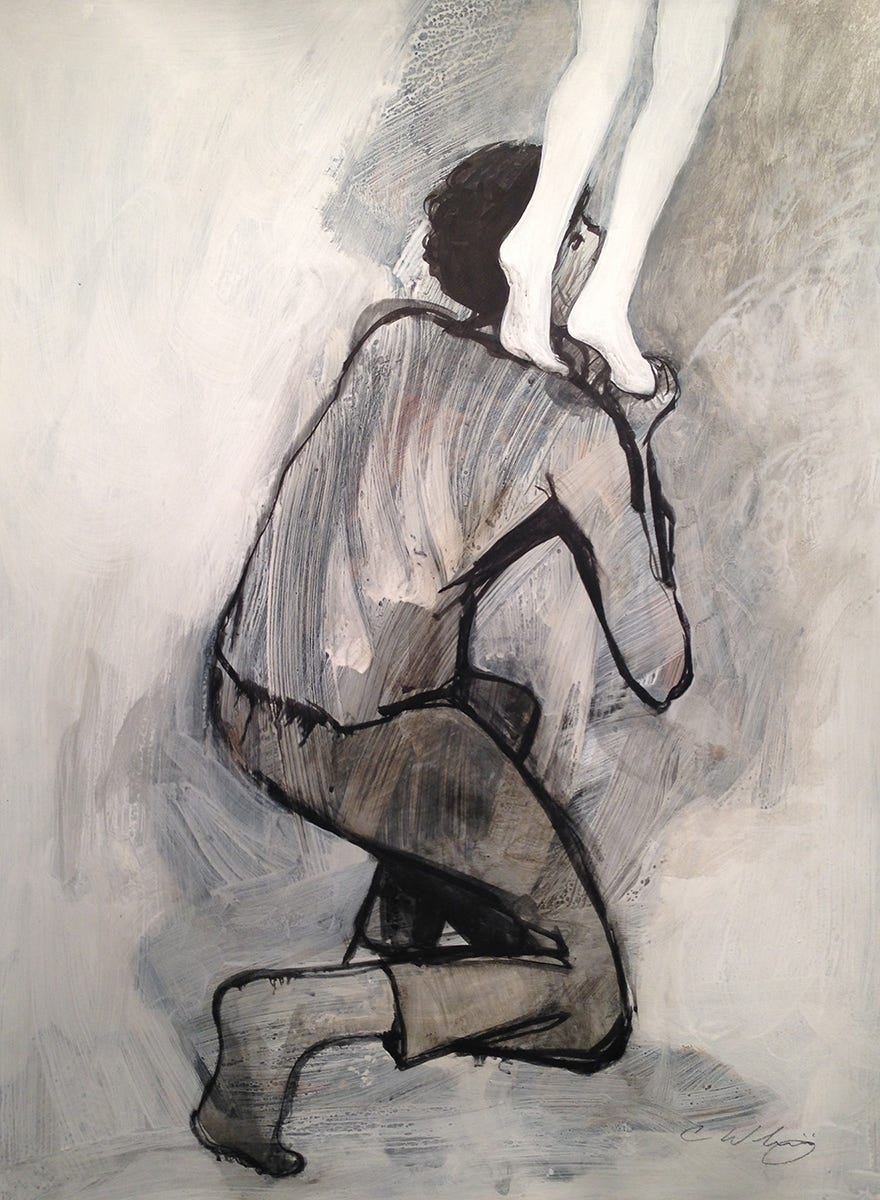
My silent, walking prayers became an act of courage—a belief that we aren’t alone, that a power exists beyond us, that this power witnesses our struggle. When I let go of God protecting everyone, God became a confidant, an inner knowing that I could trust with my worst moments. Rather than someone who didn’t help, God became someone who never leaves. Rather than someone who will prevent tragedies if we are good, God became someone walking beside every person, bearing the weight. Soon, God became the steadfast presence prompting urgent action for my neighbors—one by one (3 Nephi 11:15; 17:21). Though I used to believe God protected the righteous, now I see that God stays with the broken. As must I.
—Katie Lewis, “The Silent Vigil”


I can trust that God will guide and help me regardless of my situation.
Tish Harrison Warren: What Grows in Weary Lands

Today, we’re honored to share a conversation with Tish Harrison Warren on her beautiful brand new book, What Grows in Weary Lands.


Thus, when Jehovah brings the people to Mount Sinai and offers them a covenant relationship with him, he elaborates on his purpose behind giving Israel a covenant: “Ye have seen what I did unto the Egyptians, and how I bare you on eagles’ wings, and brought you unto myself. Now therefore, if ye will obey my voice indeed, and keep my covenant, then ye shall be a peculiar treasure unto me above all people: for all the earth is mine: And ye shall be unto me a kingdom of priests, and an holy nation” (Exodus 19:4–6). This, then, is the vision of the law of Moses and the Sinai Covenant: “a kingdom of priests, and an holy nation.” The law of Moses should not be understood as a bad law, given to bad people, but was instead a way for the Lord to help Israel, then and now, to become the kind of people that he wants them to be.
Even before Jehovah gives Israel a single commandment, the Israelites affirm, “All that the Lord has spoken we will do” (Exodus 19:8). Rather than describing a people who are wicked and rebellious, Exodus begins with the depiction of a people who are willing to do anything God asks them, even before they know what that is going to be. This is an act of tremendous faith on the part of the Israelites, as they choose to put their trust in a covenant relationship with Jehovah even before they know what the parameters of that bond are going to look like. A covenant with the Lord is not intended to be transactional, where we keep God’s commandments in order to get what we want. It is instead based on our trust in a divine Heavenly Father who wants us to be like him and has prepared a plan to that end. The covenants we make today are part of the plan, and so were the covenants in ancient Israel.
—Avram R. Shannon, “God’s Trustworthiness and Becoming a Kingdom of Priests”
To receive the Lord’s help, I need to trust Him and obey His commandments.
The ego certainly prefers a spirituality focused on certitude and transactional agreements with God over a spirituality that asks us to love one another in our shared uncertainty and suffering. Why wouldn’t we want control in a fallen world? Obeying the rules in exchange for security is a desire that certainly makes sense. Our impulse to find order and predictability in the midst of disorder and pain is both understandable and deeply human.
But as we endure life’s inevitable losses, our spirituality tends to become one of recognition—a spirituality that perceives the beauty and wonder in life amid the necessary sorrows and hardships. And though our souls can feel a deep order within reality—divine truths we are all subject to—we understand that faith doesn’t grant us certainty or obviate suffering. Rather, it offers us solace, evidence of God’s love in sublime moments, and glimpses of the eternal that anchor us in a world full of loss.
—Jennifer Finlayson-Fife, “Our Bodies Are Holy Things”

I can hear and obey the voice of the Lord.
Learning to Trust Your Own Inspiration, with Deidre Green

Today’s episode is a personal one for me—and probably for many of you—especially if you’ve ever found yourself deferring to someone else’s inspiration, or noticing a tendency to believe that someone else’s knowing is more trustworthy than your own.

