

Service, Miracles, and Waiting on the Lord
Faith Matters resources to accompany your Come Follow Me study: June 29 - July 5
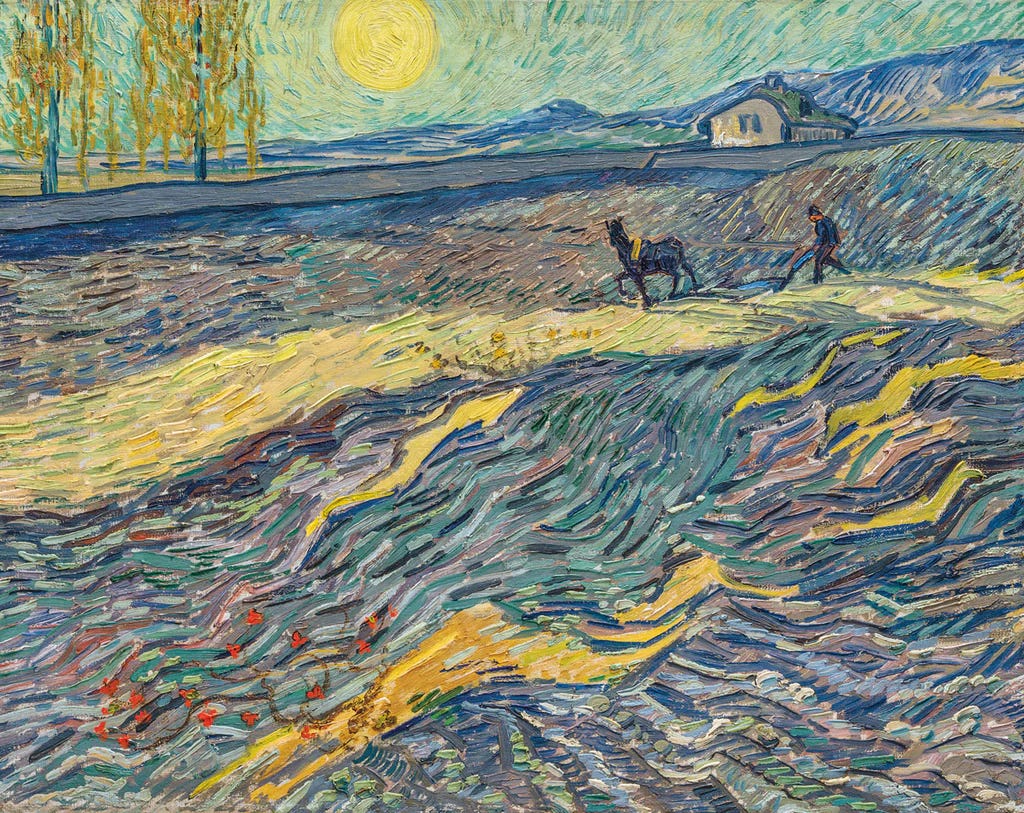
Christlike leaders serve the people they lead.
According to this passage, either I seek the Lord’s direction in all my service and respond to those situations as prompted, or I’m not His servant at all. Though I’d spent countless years pursuing what I believed was important church work, this scripture showed me that I can’t safely assume He approves of all my intentions. No, I need to know Him, to hear Him, to receive direct, daily guidance straight from Him. What a tragedy if I spend my life working “in His name,” only to end up like these people—sure I’m doing His will, but ultimately being cast out of His presence!
—Jaci Wightman, “The Observant Minister”


The anguish and guilt we feel over any prodigal is sometimes so large that we don’t set it aside to do the real work of loving. Instead, we try to fix the situation ourselves. We try to save the one who is lost, preferably through kindness but sometimes through different, useless strategies. We might flirt with where guidance stops and coercion starts. It doesn’t work.
It is not my job to try to save the ones I love. There’s a Savior for that. My feeble efforts to “save” usually complicate the situation, and sometimes even leave wounds.
It is my job to extinguish my fear so that they don’t mistake my anxiety for unbelief in their capacity, strength, and resilience to face the world outside our home.
It is their job to boldly act. To embark. To explore. To choose. To experience.
—Miranda H. Lotz, “The Prodigal Cat”
An invitation to sacrifice is an opportunity to exercise my faith in Jesus Christ.
At first, the woman wanted to yell at the man. Didn’t he know that everyone was hungry? Didn’t he know that she was starving because she was giving most of her food to her son, who was also starving? And if she fed this man, that meant she would have nothing left for her boy? Wasn’t it obvious? Wasn’t his request preposterous?
But then she thought again. This was the end of her life either way. She only had enough food left for one person, one meal. She was going to die. Her son was going to die. And while this famine would take their lives, she was not going to let it take their dignity. They would remain kind to the very end. They would share even if they didn’t have enough to share. If they were going to die, they would die living like they deserved to live.
And that is the most remarkable part of this whole story: The widow fed Elijah. She was willing to die to save a stranger.

Joseph Smith taught that a religion can only have the power necessary to bring us to salvation and eternal life if it requires the sacrifice of all things (Lectures on Faith 6). I don’t know if that sentence is more terrifying for the old, who have many things, or for the young, who haven’t even gotten a chance to start gathering things yet.
The word “sacrifice” means literally to make something sacred, to take something mundane and ordinary and to put it to the service of a transcendent and sacred purpose. To give it up, or upward. Those moments when life feels meaningless, purposeless, or arbitrary, or when we feel at war with ourselves, those are moments when the pieces of life are not gathered properly in our own judgment in service of what we believe to be most high.
You have to sacrifice everything you have and everything you are. You have to sacrifice yourself. Jesus commands you to take up your cross and follow him, meaning follow him to the place of your own execution by crucifixion. If you were inventing a religion to trick people into following you with pleasant tall tales, then that is not what you would tell them. But that is Jesus’s message. You have to submit all the parts of your being to the cross.
I can imagine each of us in a quiet moment kneeling and offering ourselves to God. And I can imagine God’s response: “Good. I can work with that.” But I can also hear him say “That’s only the beginning. You don’t even know all the parts of yourself, let alone how to sacrifice them.” I’m sorry to say that you will discover these pieces of yourself as they break down, and fail, and when you confront problems you don’t know how to solve. When that happens you have to let things die which have grown old and insufficient; ideas, desires, ways of thinking and understanding, habits, and paradigms, and more.
But the miracle of the cross of Christ is that those things that are given willingly to death upon it will be resurrected. When you choose to give your life as a body for Christ’s spirit, you will find that pieces of yourself will die along the way. But you will also see those pieces resurrected, now filled with God’s spirit and put to their proper use. The perfection that God has in mind for you isn’t a neutered, amputated, lobotomized sterility, where pieces of your spirit and body have been turned off. Christ wants all of you. This will not be a movement toward a uniform cookie-cutter image of pious, bland, sameness. Instead it makes each of us more fully and uniquely and eternally ourselves.
—Bob Sonntag, “The Sacrifice of All Things”

“If the Lord be God, follow him.”
Rivers dry up, life ends, crows fall from the sky. But God’s goodness continues forever and ever and ever. It is a stream that runs cool and clear through the desert. A jar of oil that cannot be emptied. A still small voice that pierces through winds, earthquakes, and fires. A kindness that persists through hunger and suffering. A drought cannot dry it. Death cannot kill it. Because the miracles of God are the fruits of his love. And his love fills the earth like weeds. And weeds will always find spots to grow. In crevices, on mountains, under shade, and in the sun. And if it ever feels like a miracle has stopped, another is about to begin.
—Scripture Stories for Little Saints, Episode 35

The Lord often speaks in quiet, simple ways.


I will never completely understand time. But when I can reject the idea of time as a series of gains or losses and instead look at the now, past, and future as sites of healing and redemption, it is easier for me to feel the beauty of non-modern time, to put aside the clock, to put away the notion of “options” or “maximizing time,” to release the annoyance I feel when my to-do list is disturbed by a child who should long ago have been asleep. Instead, I can see the face of God right now in that child, take her in my arms, and allow myself to feel eternity’s weight and wonder as an almost-sleeping child rests in my arms.
—Megan Armknecht, “Reckoning with Time”
