

Psalms: Turning to Jesus in times of need
Faith Matters resources to accompany your Come Follow Me study: August 24-30
Redemption comes only through Jesus Christ.
We no longer bow down before golden calves; instead we worship—without realizing it—the glowing gods of our smartphones and, even more so, the algorithms that control our digital feeds. In this context, the act of bowing my head during prayer is a radical act of choosing the object of my devotion. Even if I can only glimpse the character of the divinity I worship, yet this is a God I can actively seek and to whom I choose to be devoted. Unlike the nameless and faceless algorithms that rule the digital universe, the God I seek to worship is a pair of Heavenly Parents who are infinitely defined by mercy, justice, hope, benevolence, and love. Thus, choosing to bow my head in deference to this definition of divinity is both a symbol of my humility before God’s love and also a manifestation of my commitment to become more loving.
—Tyler Johnson, “Form as Function”
That reconciliation in heaven and earth is the testament of God’s love for us: we can be free from blame not just on the day of judgment but also today. Sin makes space for redemption and carves out a capacity for joy—and we can feel that here and now. Eve and Adam understood this, noting that were it not for their transgression, they would never have known the joy of redemption—a joy which can be felt in this life and in eternity (Moses 5:10–11). While the fall of Eve and Adam bears eternal consequences, its effects are only temporary because of Jesus Christ: spiritual and physical death can both be overcome through him.
—Anabelle Clawson, “Revelations of Divine Love”
Because of the Savior’s mercy, I can be forgiven.
Listen to “Stories and Sin: A Conversation with Adam Miller,” which includes a question about how to help our kids develop a healthy relationship with these concepts:

If my experience of guilt fixes my attention even more firmly on myself, then I’m in trouble. If my experience of guilt turns my attention away from me and towards the people who I feel guilty about having hurt, then it’s working in the right way. It’s turning me in the right direction. —Adam Miller

My testimony of Jesus Christ can help others come unto Him.


Sometimes, faith sinks its roots into the soil of our need. Maybe she’ll get baptized. Maybe she’ll go to the temple someday. Maybe she’ll join herself to the network of relationships the temple points us toward, extending her own threads of trust through time and eternity.
Then again, maybe her time with us will be brief. People drift into and out of groups all the time. There might be some stumbling block that gets in the way. Or maybe she’ll end up getting interested in something else. In her life, it’s entirely possible that this isn’t a new foundation so much as a temporary haven. If that’s the only role we end up playing, does that mean we failed? I don’t think so. Jesus called his people to be like salt. Sometimes, salt’s job is just to get people through the winter.
Whatever path that young woman chooses, I’m glad to be part of a community whose doors are open to her. I’m proud of the outgoing leaders who were there for her when she needed them. I’m proud of the newly called leaders who will freely offer her their time, energy, and attention over the coming months or years. I’m content to leave the rest of her life to whatever combination of human choice and God’s will guides the world.
—James Goldberg, “Sealing & Salting”
The Lord will help me in my time of need.
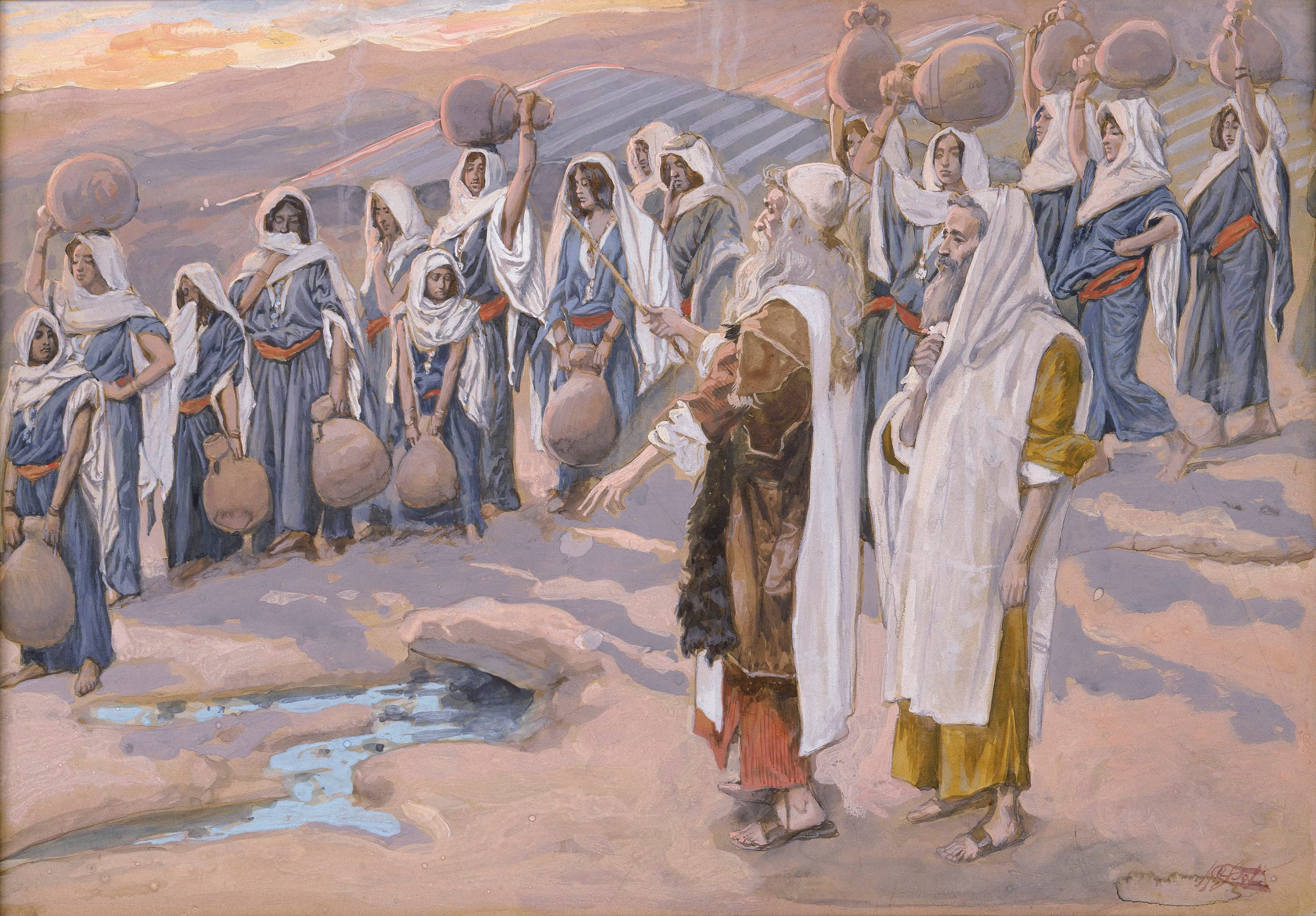
The God who walks with us through the wilderness overspills with open-handedness. When the dust-throated people complain of thirst, Moses smites the rock “and the water came out abundantly” (Numbers 20:11, emphasis added). We could imagine a mere trickle, but that wouldn’t account for the use of that word, “abundantly.” This was more than enough to quench the thirst of the dirt-encrusted Israelites. The Psalmist remembers how God “brought streams . . . out of the rock, and caused waters to run down like rivers” (Psalm 78:16). One can envisage the young Israelites splashing in this life-giving liquid, the desert sand turning to mud. This was grace you could wade in, swim in, drown in. Sometimes we receive grace sufficient for the day; other times abundance overflows our nostrils (see Numbers 11:20). …
We will be bitten by the poisonous serpents of mortality, but the Christ who suffers with us offers us healing through a glance (Numbers 21:5–9). Where we fix our gaze will determine our thriving. If we are blind to the angels in our path, we will be tempted to curse this life and the people that God has placed before us (Numbers 22:21–35). But when we see with open eyes that “it please[s] the Lord to bless Israel” (Numbers 24:1), we can sing songs of hope, can live in wondrous awe, can shout praises to the God who is light and shadow in the wilderness. I believe that “the Lord [does] delight in us” and has brought us “into this land” and that it is indeed “a land which floweth with milk and honey” (Numbers 14:8).
—Robbie Taggart, “Perceiving the Wild Abundance of the Wilderness”
God holds his silence
so that He can feel it all, don’t you see?
             Your emptiness,
             his emptiness.
You are forsaken; you are together.

His silence is God listening to you.
His silence is his reverence, his awe
at just how dark, how broken is your world.
His silence is his offering to you, not refusal.
—Gideon Burton, “Silent Saturday: On God’s Silence”


