

Announcing: Interfaith REPAIR
Join Waymakers on March 6 in Salt Lake City for a day of inter-faith encounter and peacebuilding—where difference is not something to overcome, but a source of collective wisdom.
When: Friday, March 6, 9 AM - 5 PM MT
Where: First Presbyterian Church of Salt Lake City, 12 C St E, Salt Lake City, 84103
Across the world’s faith traditions, faith leaders have long carried tools for peace. Sacred texts, rituals, histories, and lived practices offer pathways for repair—within ourselves, between communities, and across generations.
What: Interfaith REPAIR is a one-day gathering where participants from across faith traditions come together to explore how conflict is navigated and peace is practiced, taught, and embodied in different spiritual lineages, and how those tools can help us navigate conflict in an increasingly fractured world.
This is not a lecture-style conference. It’s an intimate, participatory, workshop-based day designed to help you engage deeply, learn across difference, and leave with tools you can use everyday in relationships at home, at work and in the world.
Who Interfaith REPAIR is for:
Faith leaders and community organizers
Educators and facilitators
Activists seeking spiritual grounding
Curious minds who love to learn about world religions, customs, traditions, and cultures
We encourage you to try at least one workshop outside your own tradition and learn from a different faith community.
Check out the schedule, workshop descriptions and facilitators’ bios below!
FULL SCHEDULE: Friday March 6, 2026
8:30 AM – Arrive for check-in
9:00 AM – Opening remarks with Chad Ford & Patrick Mason
9:30–12:30 – Morning workshop of choice (three hours)
12:30–1:30 – Lunch* & Peacemaker Mingle
1:30–4:30 – Afternoon workshop of choice (three hours)
4:30–5:00 – Closing remarks with Ravi Gupta
*Lunch is included with ticket purchase.
Tickets cost $100 and are for full-day participation; event access includes one morning workshop, one afternoon workshop, and lunch.
Space is limited to just 200 tickets!
FEATURED WORKSHOPS
“Cultivating Inner Peace of Mind through the Compassionate Heart”
Early Buddhist principles of peacemaking and mindfulness with Sam Akers
Workshop Description: Sam will lead participants in heart forward mindfulness practices, small group dialogues and gentle movement all through the lens of the friendly, kind and compassionate heart of Metta. Metta, the Pali word for friendship or kindness, is for all beings, without exception, including ourselves. Here, you’ll explore how having an open heart naturally supports healing and inner peace.
“Kirtan Immersion: Peacemaking through Music and Mantra”
Hindu ritual of inner and communal transformation through music & mantra with Ravi Gupta & family
Workshop Description: Kirtan is an ancient practice from India that aligns our body and mind through music and mantra. Participants in this workshop will explore the power of devotional music to create pathways of peace within ourselves and in community with others. We will learn techniques of mantra meditation as we immerse ourselves in sacred sound. No prior experience with kirtan needed.
“Forgiveness: the Power and Freedom of Letting Go”
Forgiveness from a Presbyterian perspective with Reverend Jamie White, Pastor, First Presbyterian Church of Salt Lake City
Workshop Description: Do you feel stuck by what’s happened to you? Or something you’ve done? Not sure how to let go of your bitterness? Tired of carrying around resentment? This workshop is designed to help us process our pain, release resentment, and move towards healing as we choose forgiveness. We’ll draw from both spiritual resources and therapeutic skills-based practices to offer a variety of tools to move beyond what’s happened to us and toward freedom. Bring your grudges!
“When Faith Falls Apart: Moving through Doubt and Deconstruction to the Other Side”
Faith de-/reconstruction with Reverend Jamie White and husband Dave White
Workshop Description: Questioning and critiquing religious belief isn’t really a new idea, even if ‘deconstruction’ language has gone mainstream. People have—always and everywhere—doubted and questioned their religious traditions; a natural, healthy, and necessary factor in spiritual growth. But what happens when those questions threaten to unravel everything we used to hold sacred, including relationships with loved ones who may not understand? Even more there can be often an impulse to toss out all our beliefs, like ‘the baby with the bathwater’, in our attempt to live authentically and freely. But what happens after this messy and painful season, when we discover that we still hunger for God and may want to reevaluate a life of faith? Reverend Jamie White and her husband Dave will co-host this workshop that focuses on moving through deconstruction with grace for ourselves and those we love, offers resources and practices for spiritual healing, and explores what reconstruction might look like on the other side.
“Arguments for the Sake of Heaven: How Disagreement and Confrontation can be Holy Experiences”
Jewish frameworks for sacred disagreement with Rabbi Sam Spector, Kol Ami
Workshop Description: Rabbi Spector shares how confrontation and disagreements can lead to growth and understanding and create sacredness in your communities. We will see examples from the Hebrew Bible (Old Testament) and Talmud that show how we can hold strong differences in view and yet still maintain respect and understanding. Through finding dignity in differences, we can create communities and societies that are safe and thoughtful despite lacking consensus.
“The Core Elements of Reconciliation Practice”
Exploring the core elements of reconciliation with James Patton, Quaker Peacemaker
Workshop Description: Whether between individuals or communities, reconciling a relationship damaged by harm is a challenge that often involves unpacking convoluted motives, perceptions of history, abiding pain, anger, and fear, and complex justifications for destructive behaviors. While each situation will be different, and deeply marked by individual experiences, some basic and principles apply across reconciliation efforts, such as addressing the past, confronting perceptions of the other, and seeking to transition beyond acts of harm—including the delicate nuances of dialogue, restitution, and pardon. This workshop explores the ideas and practices of reconciliation, with the objective of moving a broken relationship towards a less broken one.
“Families Can Be Together Forever – But What About Today?”
Navigating the paradoxes of committed relationships with Wendy Ulrich, PhD, MBA, author | Member of the Church of Jesus Christ of Latter-day Saints
Workshop Description: The possibility of eternal marriage and family is a fundamental doctrine of the Church of Jesus Christ of Latter-day Saints. However, the prospect of an eternal relationship sounds like anything but heaven when we can hardly get through dinner together today. This workshop will explore the stages of long-term committed relationships—in families and even with God—then suggest tools for navigating relationship paradoxes that call for both individual flourishing and committed connection, both fixing problems and tolerating them, and both holding on and letting go. Bring your current relationship challenge or fear and let’s see if we can move the needle toward peace, hope, and flourishing—whether or not we believe in forever.
FACILITATOR BIOS
OPENING REMARKS:
CHAD FORD & PATRICK MASON
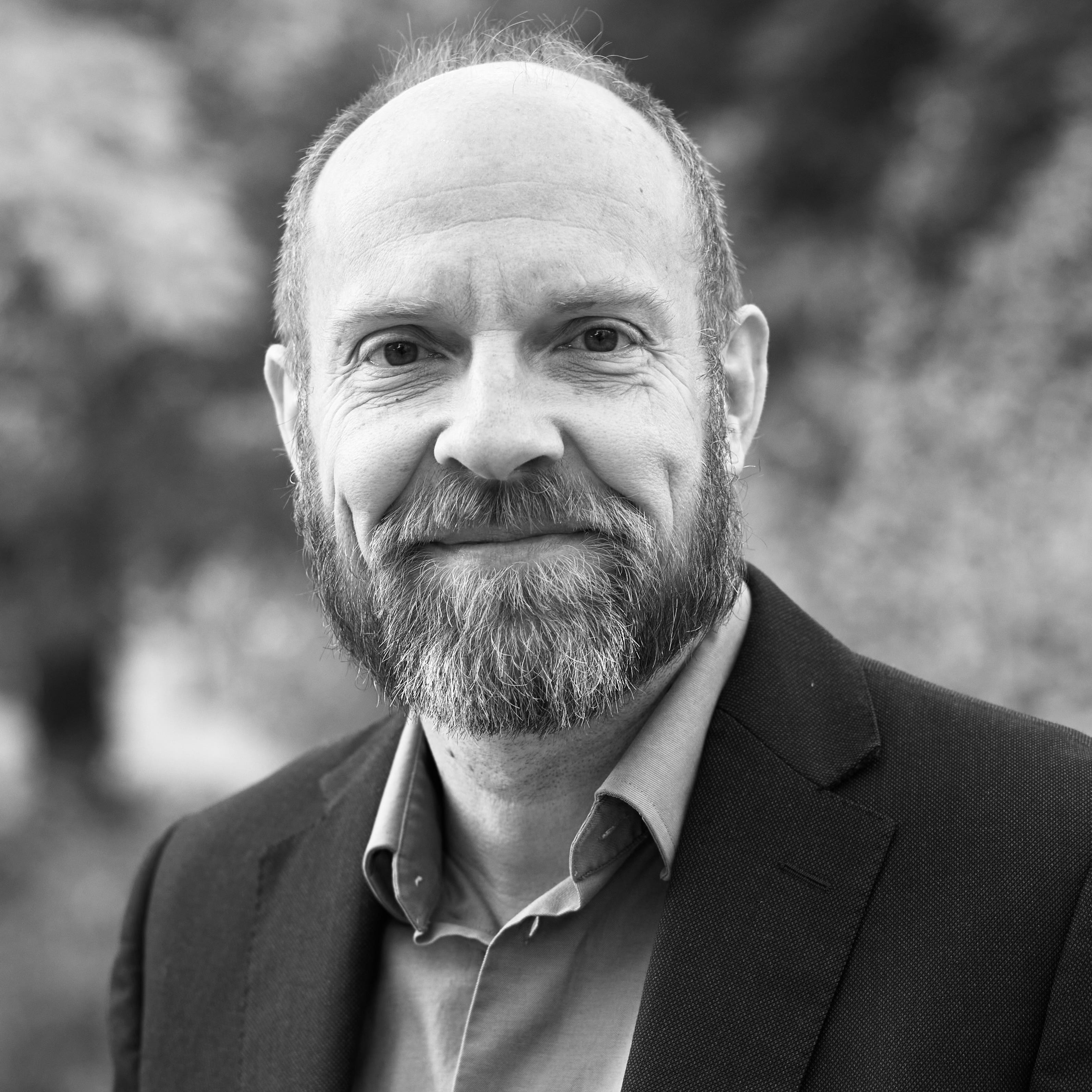
BIO: Chad Ford is an international conflict mediator, facilitator, and peace educator. While most people know him for his work at ESPN, being a basketball analyst and writer was actually his side-gig for most of the last two decades. Chad’s peacebuilding work is what defines him. Chad served as the Director of the David O. McKay Center for Intercultural Understanding at BYU-Hawaii. for nearly twenty years where he created a major and certificate program in intercultural peacebuilding. In 2024, Chad left his position at BYU-Hawaii to join the faculty at Utah State University. Chad is serving a joint appointment with the Religious Studies department and the Heravi Peace Institute.
His first book, Dangerous Love, weaves Chad’s experiences into a deeply personal step-by-step exploration of how we transform fear and conflict. His second book, 70x7, draws on Chad’s experiences as a Christian peacebuilder to show us how Jesus’s path of practicing 70×7 has the power to repair relationships by transforming destructive conflict into constructive peace. Chad has his own substack newsletter called the Waymaker if you want to follow his latest writing, podcasts and events.
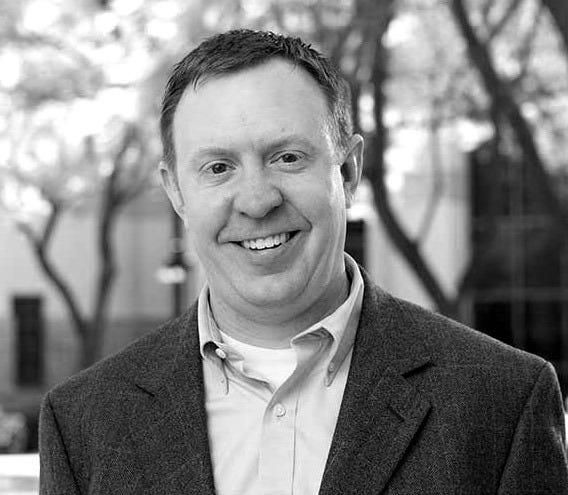
BIO: Patrick Mason holds the Leonard J. Arrington Chair of Mormon History and Culture at Utah State University. He has written or edited several books, including Restoration: God’s Call to the 21st Century World; Proclaim Peace: The Restoration’s Answer to an Age of Conflict and Planted. He was a Fulbright Scholar in Romania in 2015 and is a past president of the Mormon History Association. Patrick is frequently consulted by the national and international media on stories related to Mormon culture and history. He teaches courses on Mormonism, American religious history, and religion, violence, and peacebuilding.
WORKSHOP FACILITATORS:
Ravi M. Gupta
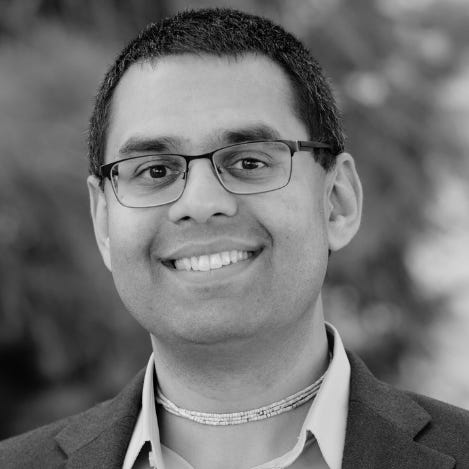
BIO: Dr. Ravi M. Gupta holds the Charles Redd Chair of Religious Studies and serves as Department Head of History at Utah State University. He has published numerous journal articles and five academic books, including most recently, Hinduism: the Primary Sources, co-authored with Dr. Jeffery Long and published by Oxford University Press. Ravi has received four teaching awards, a book award, a National Endowment for the Humanities summer fellowship, and two research fellowships at Oxford. He is a Permanent Research Fellow of the Oxford Centre for Hindu Studies and a past president of the Society for Hindu-Christian Studies. He enjoys teaching World Religions, Hinduism, and Sanskrit at Utah State. Prior to arriving at USU, Ravi taught at the University of Florida, Centre College, and the College of William and Mary. He is regularly invited to speak to both academic and devotional audiences around the world on topics related to Hindu practice and philosophy. He lives in Logan with his wife, Amrita, and his sons, Chaitanya and Purushottam.
With his family, Ravi will facilitate two sessions of “Kirtan Immersion: Peacemaking through Music and Mantra” — Hindu ritual of inner and communal transformation through music & mantra as well as offer the event’s closing remarks.
Samantha (Sam) Akers
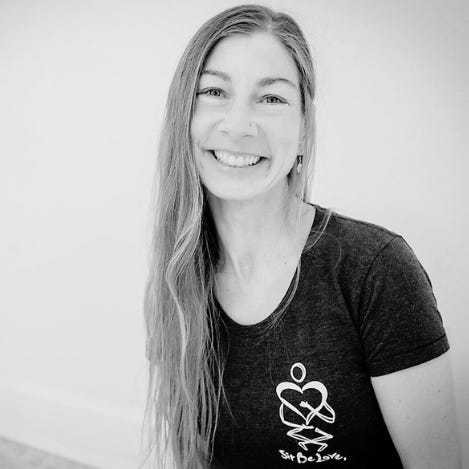
BIO: Samantha (Sam) Akers has been a yoga and meditation student and teacher for 30 years. She discovered the healing benefits of Buddhist meditation and yoga when she was diagnosed with several serious illnesses in her early 20’s. Her deepest healing began when she was taught Metta and how to work with chronic pain and fatigue, through mindful awareness. Over the years, Sam wanted to offer healing modalities to others and also became interested in meditation and early childhood attachment repair, studying with her teacher, George Haas for 10 years in this particular style of practice which uses traditional Buddhist practices in tandem with western psychology. Sam is a Certified Yoga Therapist, Faculty at Soma Yoga Institute, a Certified Mindfulness Teacher-Leader and a mentor through the Mindfulness Institute of Berkley, CA. She also built the first fully therapeutic yoga studio in Los Angeles and created her own method for practice, the TheraYoga Method, in 2012.
Sam’s heart home is in the Early Buddhist traditions and practices. She started SitBeLove in 2018 a platform for people to learn about secular and Buddhist mindfulness, loving kindness practices and ways to repair their relationships with themselves and others as a pathway to deep healing. She is currently the co-guiding teacher of Northern Utah Insight leading groups (sanghas) in Logan and Salt Lake City, a Buddhist Chaplain and Eco-Chaplain earning her certification through the Sati Center with her current teacher Gil Fronsdal. You can also study with Sam online through her many offerings.
Sam will facilitate two sessions of: “Cultivating Inner Peace of Mind through the Compassionate Heart” — Early Buddhist principles of peacemaking and mindfulness
Rabbi Samuel L. Spector
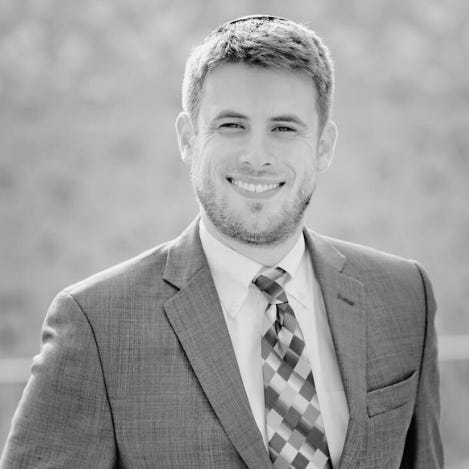
BIO: Rabbi Samuel L. Spector has been the rabbi of Congregation Kol Ami since 2018. He was born and raised in Seattle, Washington. He attended the University of California, San Diego, where he was an active brother of the Alpha Epsilon Pi Fraternity. Rabbi Spector graduated with Cum Laude honors with a B.A. in Judaic Studies and was elected Phi Beta Kappa. He received his Masters in Hebrew Letters and Rabbinic Ordination from the Hebrew Union College-Jewish Institute of Religion in Los Angeles.
While in rabbinical school, Rabbi Spector served as the student rabbi of Congregation Etz Chaim in Merced, California and as a member of the Chaplain Candidate Program for the United States Navy.
Prior to coming to Congregation Kol Ami, Rabbi Spector served as the Associate Rabbi of Temple Judea in Tarzana, California. He is currently a member of the Central Conference of American Rabbis, and serves on the advisory board for the Salt Lake Chamber and the Christian Center of Park City.
He is an avid fan of baseball, Jewish history, and traveling, having been to over 70 countries. He is conversational in Hebrew and Spanish. In his free time, you can find Rabbi Spector playing with Nezek, his Brittany Spaniel, and Walter, his Chocolate Lab. Rabbi Spector is married to Jill, an Idaho native who works in hospitality. They are proud parents of their daughters—Miriam, Esti, and Noa—and their bonus daughter, Yasamin, a high school student from Afghanistan.
Rabbi Spector will facilitate one workshop in the morning, “Arguments for the Sake of Heaven: How Disagreement and Confrontation can be Holy Experiences”—Jewish frameworks for sacred disagreement
Rev. Jamie White
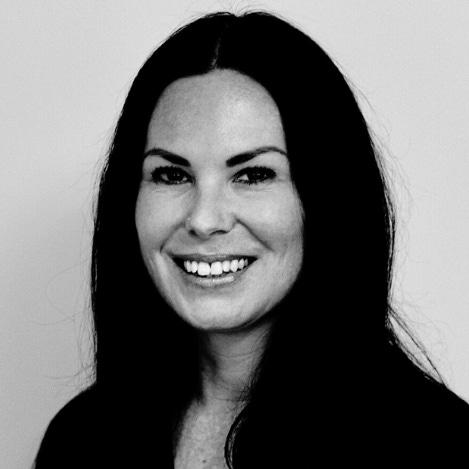
BIO: Rev. Jamie White serves as the senior pastor of the historic First Presbyterian Church of Salt Lake City; prior to which she served congregations in California, Utah, and Pennsylvania. She received her theological education at Vanguard University, Fuller Seminary, and Princeton Seminary. Beyond her ministry in the Presbyterian Church (USA), Jamie serves on several local non-profit boards, working alongside community partners to support mental health awareness, suicide prevention, and foster care; to resource those facing food, housing, and immigration crisis; and to foster interfaith dialogue. Jamie is also a founding board member of Kenya Partners Nakuru, a large non-profit working to break the cycle of poverty and disease for children in rural Kenya by providing healthcare, education, and community support. Jamie is married to Dave, a licensed clinical mental health therapist, and they have three children (Blake 26, Chase 22, Mila 12).
Jamie will facilitate two workshops: the first “Forgiveness: the Power and Freedom of Letting Go” Forgiveness from a Presbyterian perspective, and the second will be facilitated with her therapist husband, Dave White: “When Faith Falls Apart: Moving through Doubt and Deconstruction to the Other side.”
Dave, who originally hails from Kansas City, works as a licensed mental health counselor, is a drummer and an avid outdoor enthusiast.
James Patton
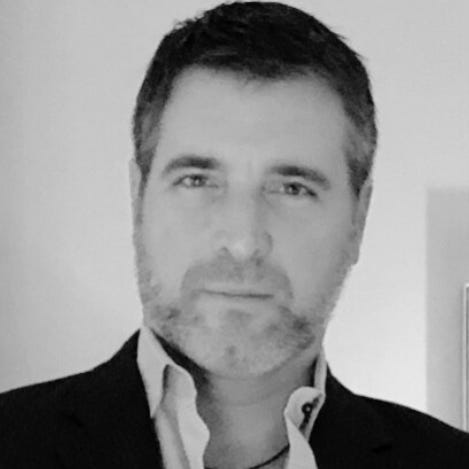
BIO: James Patton is an Associate Professor of Professional Practice at Utah State University’s Heravi Peace Institute and a Founding Partner of the women-led consulting firm, Lead Integrity. He has conducted conflict transformation, reconciliation, and economic development for 25 years in 40 countries, including such programs as: training women Indigenous and Afro-descendent leaders on reconciliation to support reintegration of former combatants in Colombia; facilitating Cambodian Buddhists’ role in post-genocide social cohesion; developing frameworks and training religious actors in preventing violent extremism in Kenya, and; supporting the Saudi Arabian Ministry of Education in designing and implementing tolerance reforms in education.
James’ non-profit experience includes serving as President and CEO of the International Center for Religion & Diplomacy and Deputy Regional Director for Latin America and the Caribbean for the American Friends Service Committee, and his governmental experience includes leading stability operations assessments for the U.S. Department of State in South Sudan and enhancing the Religion and Conflict portfolio for USAID’s Office of Conflict Management and Mitigation.
James has served in various advisory roles, including on the U.S. Department of State’s Working Group on Religion and Foreign Policy, the United Nations Multi-Faith Advisory Council, and as the Religion and Conflict Co-Chair for the G20 Interfaith Forum. He is a Lifetime Member of the Council on Foreign Relations and an Advisory Council Member for the Rumi Forum and the Center for Women, Faith, and Leadership. James has authored numerous policy and practitioner texts, including co-authoring the U.S. Institute of Peace publication, Religion and Conflict Guide Series: Religion and Reconciliation. James holds a Master of Divinity from Harvard University and a Master of Law and Diplomacy from the Fletcher School at Tufts University.
James will facilitate two sessions of “The Core Elements of Reconciliation Practice” — Exploring the core elements of reconciliation
Dr. Wendy Ulrich
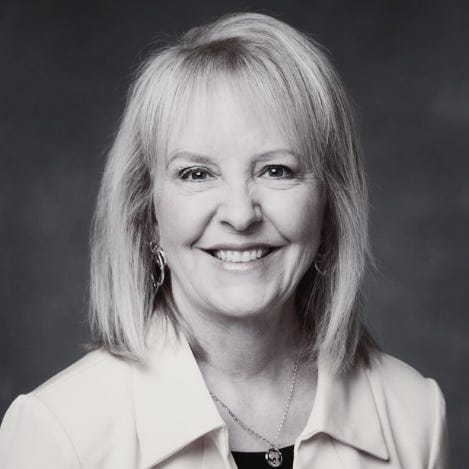
BIO: Wendy Ulrich, PhD, MBA, founder of Sixteen Stones Center for Growth, has been a licensed psychologist and management consultant for over thirty-five years. She is a former president of the Latter-day Saint Counseling and Psychotherapy Association, has been a visiting professor in both religion and psychology at Brigham Young University, and has served on the General Council of the Relief Society (worldwide women’s organization) of The Church of Jesus Christ of Latter-day Saints. Her books include Forgiving Ourselves, Weakness is not Sin, Let God Love You: Why We Don’t, How We Can, and best-selling The Why of Work: Creating Abundant Organizations that Win, co-authored with Dave Ulrich – her husband of fifty years … and counting!
Wendy will facilitate two sessions of “Families Can Be Together Forever – But What About Today?”
Have questions about Interfaith REPAIR? You can email Waymakers at: waymakersks@gmail.com!
And don’t forget to subscribe to the Waymakers Substack to read essays, listen to podcasts and find out more about all of their upcoming events.

Homoousios and the Grammar of Perfect Love: A Constructive Re-reading of Nicaea in Pro-Nicene Perspective
Abstract
This article advances a constructive interpretation of the Nicene confession that the Son is *homoousios* (“of the same substance”) with the Father. Historically, *homoousios* functioned as a contested boundary-marker requiring pro-Nicene stabilization. This article argues that, once disciplined by the anti-partitive and anti-subordinationist intentions of Nicaea, the term is most coherently specified as the unity of perfect, uncreated Love. The argument proceeds by (1) situating the term within its historical-linguistic controversies; (2) attending to Athanasius’s radiance imagery as a model of non-diminishing communication; and (3) engaging Augustine’s account of the Spirit as the bond of love (*vinculum caritatis*) to identify the shared “substance” as the act of loving communion itself. The resulting specification reframes divine oneness as a non-competitive ontology of perfect relationality, opening a new conceptual pathway for theological dialogue.
1. Introduction: From Conciliar Term to Doctrinal Rule
The Council of Nicaea (325) is routinely treated as the decisive doctrinal answer to the Arian controversy. Yet the decades following 325 reveal that Nicaea inaugurated a long process of interpretive stabilization: a gradual discipline of terms such as *ousia* and *hypostasis* to confess unity and distinction together without division or subordination.
This article offers a constructive proposal that takes that pro-Nicene stabilization seriously. *Homoousios* is approached not as a metaphysical inventory of divine “material,” but as a doctrinal rule: a constraint that blocks certain possibilities of speech (e.g., that the Son is a creature) and makes possible the church’s worship and soteriology. As Lewis Ayres suggests, pro-Nicene theology is less a fixed formula than a “culture of learning” that disciplines how we speak of the one God. If *homoousios* secures undivided divine fullness, the question becomes: what best names that undivided “sameness”?
My thesis is that the unity *homoousios* safeguards is most coherently specified as perfect, uncreated Love. This is not a historical claim regarding the secret intent of Nicene bishops; rather, it is a constructive specification that renders the Nicene rule intelligible, non-material, and intrinsically communicative.
2. Homoousios: Historiography, Semantics, and Conciliar Function**
The term *homoousios* did not arrive at Nica a settled technical word. It carried complicated associations—with Gnostic emanation theories, for instance—and was criticized for being extra-biblical. Yet it was chosen because it could function as a decisive “boundary-marker” (Hanson) to exclude the claim that the Son is ontologically inferior to the Father.
The semantic challenge is profound: how can two be “of the same substance” without being two “parts” of a whole? G.C. Stead’s analysis remains crucial: divine substance-language must be read under an *anti-partitive constraint*. God is not a genus with instances, nor a “stuff” distributed in shares. Pro-Nicene theology insists that divine unity is the unity of the one God. Therefore, the “sameness” of Father and Son must point to a unity of a different order—a unity of communion rather than composition.
3. “Light from Light”: Athanasius and Non-Diminishing Communication**
Athanasius’s defense of the Nicene confession centrally employs the creed’s own radiance imagery. He argues that the Son is “proper” to the Father’s essence, using light as a model for communication without depletion.
Athanasius: "For the radiance also is not outside the Light, but is by nature its proper offspring... so also the Son is not outside the Father, but is proper to His Essence." (*Orations Against the Arians* 1.22)
For Athanasius, this analogy proves that divine generation is categorically distinct from creation. The Father’s being is not lessened by begetting the Son.
> "God, though He be Father, is not decreased; nor, though He be Light, is He diminished; but He is ever the same, and as He is Father, He has His Son." (*Orations Against the Arians* 2.33)
This “radiance” logic provides the essential bridge to Love. It demonstrates a unity where what is given is not subtracted from the giver but is fully possessed in the act of giving. Love operates according to the same non-competitive logic: it is perfected, not partitioned, through communication.
4. Augustine: The Ontological Weight of Love
While Athanasius provides the structure of non-diminishing the decisive name. In *De Trinitate*, he explores the scriptural claim “God is love” (1 John 4:8) as an ontological disclosure, not merely a moral description.
Augustine: "Love is a kind of life coupling together, or seeking to couple together, two things, namely the lover and the thing loved." (*De Trinitate* VIII.10.14)
Augustine’s trinitarian development culminates in identifying the Holy Spirit as the consubstantial communion of the Father and the Son.
"The Holy Spirit is something common to the Father and the Son... this communion is consubstantial and co-eternal; and if it may fitly be called love, it is so called." (*De Trinitate* XV.17.27)
This is the critical constructive move: by reading *homoousios* through this Augustinian lens, the “substance” shared by the Father and Son is identified as the very act of uncreated Love that is the Holy Spirit. Divine being (*ousia*) is revealed to be loving communion (*koinonia*).
5. Constructive Synthesis: A Non-Competitive Ontology of Love**
The specification of *homoousios* as Perfect Love reframes the divine unity in a way that directly addresses a central tension in trinitarian dialogue: the status of the “individual.” Classical theology fears that “social” models introduce a community of three discrete individuals, risking tritheism. Conversely, social models often fear that classical *homoousios* collapses personal distinction into a monadic singularity.
The logic of Love resolves this by instituting a **non-competitive ontology**. In finite, creaturely existence, space, resources, and identity are often competitive. In God, if the divine “substance” is Perfect Love, then the Father’s “being” is not a territory to be defended but is constituted by the act of giving His life to the Son. Distinction here is not separation but a differentiation of relational directions within one, undivided movement of love:
* The Father is the eternal act of giving love.
* The Son is the eternal act of receiving and returning love.
* The Spirit is the eternal bond and gift of that love.
This model preserves the “social” intuition of a divine community of distinct Persons, while also securing the “Nicene” intuition of one God. The Persons are not three parts of a whole but are one singular, non-competitive event of loving communion—much as Athanasius’s sun, ray, and illumination are distinct to the mind but one in reality.
6. Methodological Postscript: The Task of Retrieval**
This proposal is an exercise in what can be termed *constructive retrieval*. It is not a purely historical study aiming to recapture original intent, nor is it a free-flowing constructive system. Following theologians like T.F. Torrance, it seeks to “think with” the tradition—particularly its pro-Nicene grammar—to address persistent questions, refusing to treat “being” as an abstract substrate behind God. Instead, it retrieves *homoousios* as a rule that opens a window into “Being-as-Communion.” This method allows the tradition’s deepest theological concerns to inform contemporary dialogue without demanding strict metaphysical agreement.
7. Conclusion
This article has argued that *homoousios*, disciplined by pro-Nicene grammar, is best specified as Perfect Love. This move reframes divine oneness not as a monolithic a collective of three, but as the perfect, non-competitive act of mutual self-giving that is God’s own life. By identifying the shared substance as the bond of love, the proposal generates a coherent ontology of communion. While different theological traditions may provide divergent metaphysical explanations for the ground of divine unity, this specification reveals a profound convergence in describing its character: a unity so total and self-diffusive that it can only be named, in of Christian confession, as Love.
Bibliography
Athanasius of Alexandria. *Orations Against the Arians*. In *Athanasius: Select Works and Letters*, edited by Archibald Robertson. Nicene and Post-Nicene Fathers, Series II, vol. 4. Peabody, MA: Hendrickson, 1994.
Augustine. *De Trinitate (The Trinity)*. Translated by Edmund Hill. Hyde Park, NY: New City Press, 1991.
Ayres, Lewis. *Nicaea and Its Legacy: An Approach to Fourth-Century Trinitarian Theology*. Oxford: Oxford University Press, 2004.
Hanson, R. P. C. *The Search for the Christian Doctrine of God: The Arian Controversy 318–381*. Edinburgh: T&T Clark, 1988.
Stead, G. C. *Divine Substance*. Oxford: Clarendon Press, 1977.
By Donn ianuzi I am an attorney licensed in Texas and Nevada and am looking for scholar or regular contributor to collaborate even take over my thesis that love is the uncreated substance. I can be reached at donnesq@yahoo.com